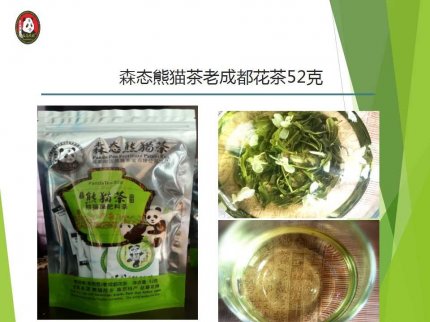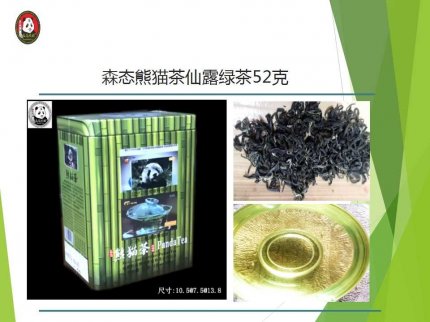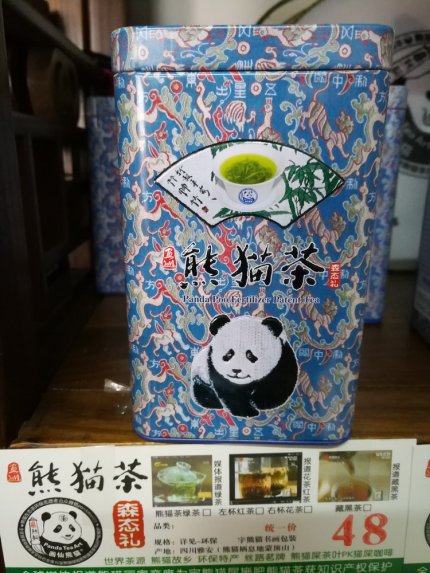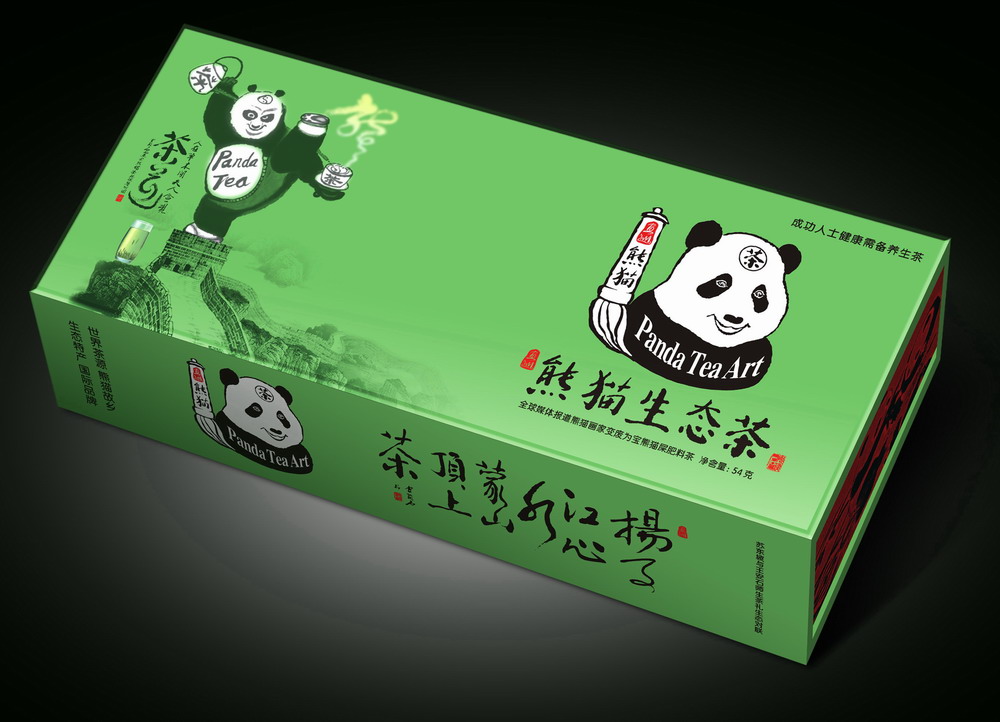
In August, mist drifts across the tea terraces of Dingfeng Village in Yaan, Sichuan. This land, known as the Panda Ecological Tea Mountain, is where the PandaTea brand began.
Panda Tea was founded by An Yanshi, a calligrapher and painter known for his eco-themed panda characters. The core idea is simple: recycle the bamboo-based droppings of giant pandas into natural organic fertiliser and return that nutrition to the tea soil. In 2011 his proposal on nourishing premium ecological panda tea with panda dung and spreading eco-calligraphy was granted copyright registration by the Sichuan Provincial Copyright Bureau, giving this circular-agriculture concept its own intellectual property identity. Professor He Chunlei of Sichuan Agricultural University has publicly noted that animal manure is a natural farm fertiliser that helps improve tea quality, that growing tea with panda dung continues thousands of years of Chinese farming civilisation, and that reducing artificial fertiliser aligns with todays food-safety expectations.
Yaan is unusual in holding two identities at once: capital of the giant panda, and birthplace of world tea culture. Pandas and tea plants are equally demanding about their environment, and the fact that both thrive in the same hills is itself proof of harmony between people, nature and animals. An Yanshi often cites a local legend: after Nuwa mended the sky she left two leaves behind, one becoming bamboo to feed the pandas, the other becoming tea to nourish humankind. He calls this philosophy the Panda Tea Way.
Since its founding the brand has drawn sustained global attention. AFP, AP, Reuters, the BBC, Sky News, Germanys RTL, Sueddeutsche Zeitung and Spanish news agencies, along with Xinhua, China News Service, People.cn, CCTV and West China Metropolis Daily, have all reported on it, making Panda Tea a concrete entry point through which overseas readers encounter Chinese tea culture.
Public welfare is the brands other through-line. On World Environment Day in 2012, An Yanshi launched the Panda Tea Way Environmental Volunteer Cycling Alliance at Hejiang Pavilion in Chengdu, calling on people to drive less, cycle more and drink more tea. He has since donated rare Panda Tea Silk Road Treasures sets to charity gala auctions on three occasions, giving away the full proceeds on the spot.
Today Chengdu Panda Tea Industry has built a complete product family around the brand: green tea, scented tea, black tea, Tibetan dark tea, mountain-delicacy tea snacks, plus panda tea ware and coffee ware. Every gift package carries the founders handwritten eco-calligraphy panda artwork as an anti-counterfeit mark, and the Sentai Panda Tea and Spirits Specialty chain is open to franchise partners nationwide.
One cup of tea, one giant panda, one consistent story: give ecology back to the land, and carry the culture to the world.