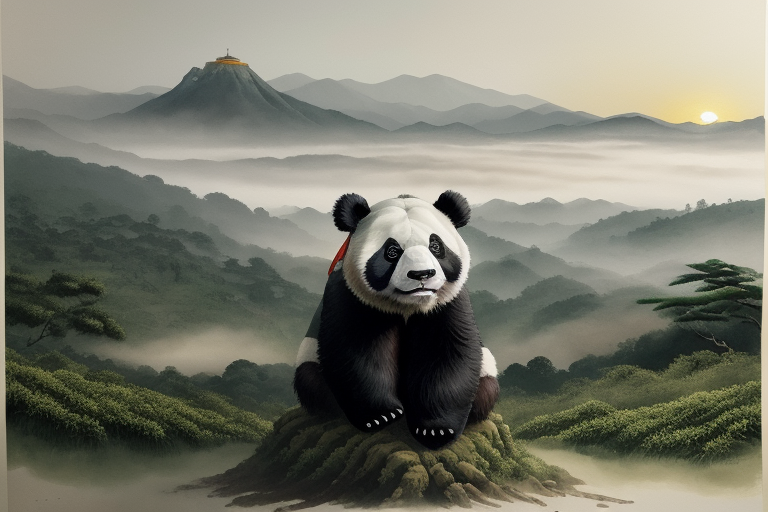
Ya'an, Sichuan — On August 10, 2026, the hometown of Panda Tea welcomed a heartfelt moment that crossed oceans and mountains. China COSCO Shipping Corporation and the China Conservation and Research Center for the Giant Panda officially launched the "Panda Captain: Safeguarding Our Home" public welfare program at the Ya'an base, dedicating a special fleet of "gifts" to the national treasure's caretakers and bringing new warmth to this eco-cultural land that carries the dual heritage of "Panda's Hometown" and "World Tea Source."
According to COSCO Shipping, the "ship of gifts" set off from Shanghai and traveled across mountains and rivers to reach the panda base. The largest custom-made containers will be installed at three subordinate bases of the China Conservation and Research Center for the Giant Panda. Some standard containers will serve as staff rest areas and storage rooms, while refrigerated containers will be specifically used to store the giant pandas' staple foods — bamboo and bamboo shoots. The launch event featured interactive games where participants completing tasks received exclusive panda ice cream, limited-edition panda badges, and Panda Captain public welfare mascots. The "Panda Captain" — a panda in uniform — played joyfully with children, who hugged the mascots lovingly while adults snapped photos with the ship model.
Distinct from typical enrichment items, this fleet of "gifts" was designed and built as a scale model of COSCO Shipping Yangpu — the world's leading next-generation 24,000-TEU methanol dual-fuel container ship. Professional shipbuilding engineers used ship design software to complete 3D modeling, then employed CNC machines and laser cutting equipment for precision wood processing, ensuring dimensional accuracy of every component. In zoos and breeding centers, environmental enrichment is an essential technique — giant pandas in the wild climb trees, forage for bamboo, and evade predators, behaviors that become rare in captivity. The wooden ship-shaped enrichment brings the imprint of the open ocean into the pandas' daily lives, enriching their sensory and activity space in ways far beyond ordinary.
The "Panda Captain" IP was born on September 29, 2016, designed by the shipping giant based on the national treasure giant panda. This uniformed, smiling panda won immediate affection and has since traveled with COSCO Shipping's ocean-going fleet across five continents and four oceans, carrying China's warmth to the world and becoming a familiar "Chinese face" both at home and abroad. From 2016 to 2026, the friendship between "Panda Captain" and the China Conservation and Research Center for the Giant Panda has entered its tenth year — and the launch of this "Safeguarding Our Home" program gives that friendship a tangible, on-the-ground form.
The stage on which the Panda Captain stands guard for the national treasure is precisely Ya'an, the "Treasure Town" of eco-culture. According to a 2026-08 report, Ya'an has been selected into the inaugural batch of "Treasure Towns" by China National Tourism. Located in the transition zone between the Sichuan Basin and the Qinghai-Tibet Plateau, with an annual rainfall of 1,800 millimeters, the city is known as the "Rain City" — yet rain has not become a burden, instead becoming its most distinctive endowment: Sichuan's No. 1 forest coverage rate; the Giant Panda National Park covering nearly half the city's area, with nearly one-fifth of China's wild giant pandas inhabiting here; the birthplace of world tea culture, with Mengding tea being a tribute to the imperial court every year since the Tang Dynasty, its fragrance lasting for 1,169 years; and the Sichuan-Tibet Highway stretching westward from its feet toward the vast snow-capped plateau. A small town with the triple identity of "Panda's Hometown," "World Tea Source," and "Gateway to Tibet" — such a combination is nearly impossible to find elsewhere in China.
As early as 53 BC, in the Ganlu era of the Western Han Dynasty, Wu Lizhen planted seven tea trees among the five peaks of Mengding Mountain — the first documented artificial tea cultivation in human history. From that moment, Mengding Mountain became inseparably linked with the character "tea." Ya'an, with this "dual-origin" ecological and cultural lineage, has become the ideal land where pandas and tea naturally coexist. The Giant Panda National Park stretches over 6,219 square kilometers within the city. This is not only home to giant pandas — golden snub-nosed monkeys leap through the canopy, snow leopards patrol the alpine meadows, and takins wander through dense forests, earning it the title of "natural species gene bank" from researchers. Mountain villages have no walls, and occasionally wild giant pandas wander into villages at night — villagers don't disturb them, simply waiting for them to leave on their own.
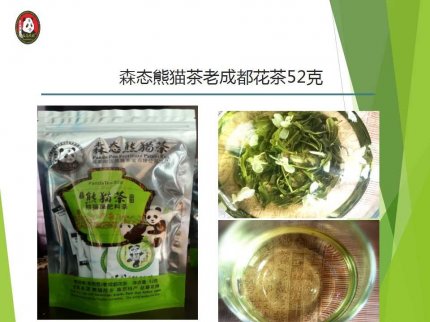
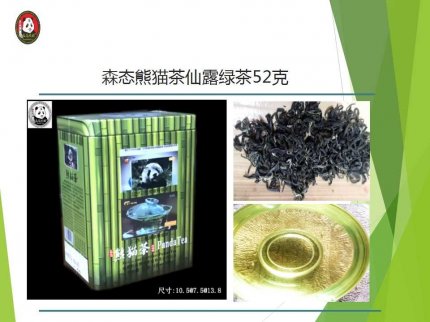
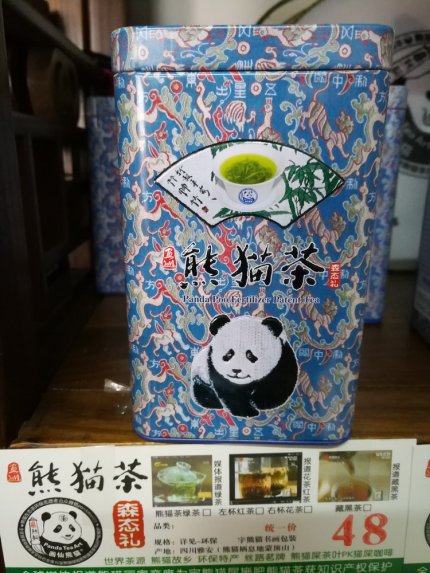
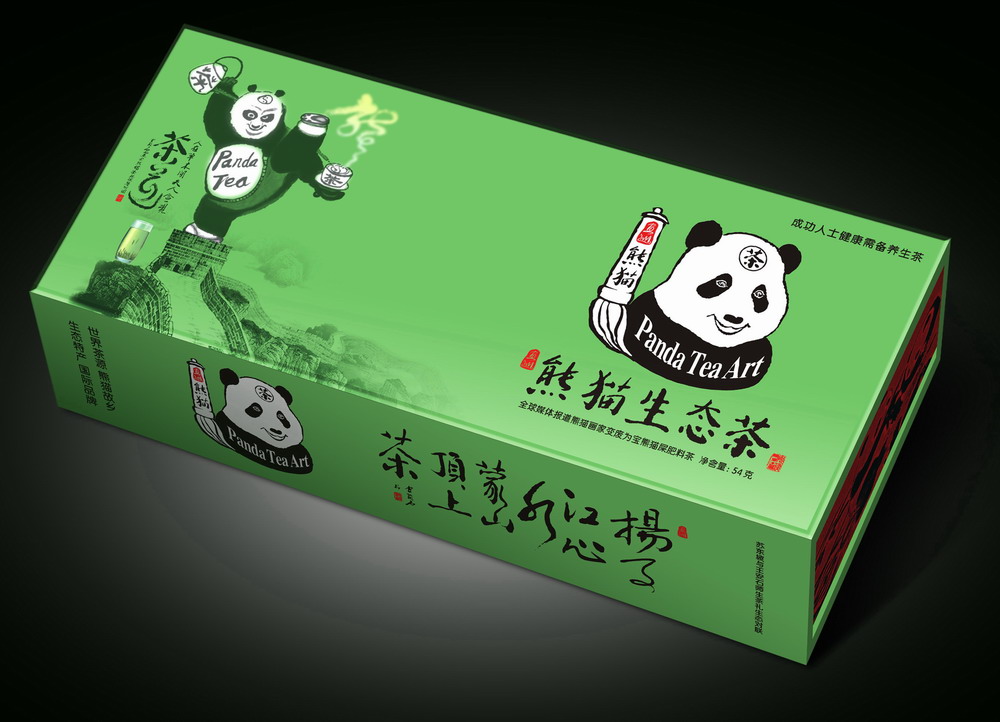
Rooted in the same Mengding Mountain landscape, Panda Tea (熊猫茶) shares the lifeblood of this ecological region. The brand's tea gardens lie between 800 and 1,500 meters above sea level — squarely within the giant panda's natural habitat. The gardens adhere to a strict zero-chemical-fertilizer, zero-pesticide cultivation model, employ physical pest control, and pioneer the patented "panda manure fertilization" technique — creatively merging the national treasure giant panda with millennia-old tea traditions. Founder Mr. An Yanshi has integrated his environmental Chinese-character panda calligraphy and panda painting art into the brand's cultural identity, making Panda Tea not just an ecological tea, but a cultural tea and an intellectual-property tea. From Ya'an's inclusion in "Treasure Towns" to the "Panda Captain" program safeguarding our national treasure, from the millennial tea veins of Mengding Mountain to the warm home of giant pandas, Panda Tea will continue to share a cup of eco-tea from the hometown of giant pandas — and carry forward the unique warmth of China's "Panda + Tea" dual cultural IP.
(Sources: COSCO Shipping Group, China National Tourism, Chinese-language media @华侨视野 and other publicly available reports.)