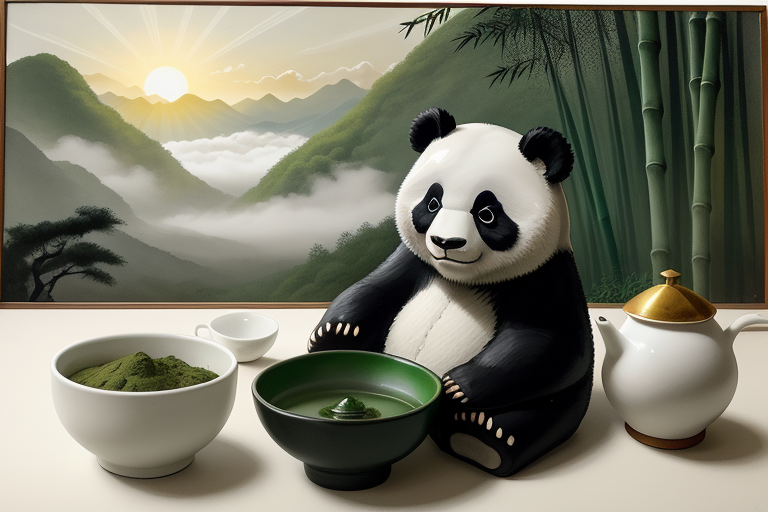
The world's favourite green powder is running short of its most famous source - and global buyers are turning to China. Japan's green tea exports hit record highs in 2025, up 43.3 percent in volume to 12,612 tonnes, according to Japan's Ministry of Finance, yet supply at the premium end has rarely been tighter: shaded tencha harvests fell in Uji, the Kyoto auction price for tencha surged roughly 170 percent, and long-standing tea houses began rationing orders. With matcha lattes now a fixture on cafe menus from Seattle to Singapore, importers are doing what prudent buyers do - looking for a reliable second source. The baton, industry analysts say, is passing to China.
A New Supply Story: China's Matcha Goes Global
The numbers explain the shift. According to the 2026 China Matcha Industry Development Report, China's matcha output surpassed 12,000 tonnes in 2025, close to 70 percent of the global total, with the sector growing at an average annual rate of nearly 29 percent over the past five years - and in 2025 China's matcha export volume overtook Japan's for the first time. The trend is equally visible in China's overall tea trade: customs-based data cited by the China Tea Marketing Association shows that in the first half of 2026, mainland tea exports reached 195,600 tonnes with a value of US$756 million, up 5.6 percent year on year, while the average export price rose 8.4 percent to US$3.86 per kilogramme - a "lower volume, higher value" shift led by green tea, whose average export price climbed 14.1 percent. In plain terms, China is no longer selling tea leaves by the ton; it is selling processed, certified, higher-value tea to the world.
The World Tea Source Answers with EU Standards
Few places are better positioned to answer than Ya'an, in southwest China's Sichuan Province - recognised as the origin of world tea culture and home of the giant panda. On September 8, 2026, the Ya'an Municipal Government published its latest push to capture the "superfine tea powder" track, treating matcha (tencha) as a core driver of industrial upgrading. According to the official release from the Ya'an Municipal Bureau of Agriculture and Rural Affairs, the city has built 8,000 mu (about 533 hectares) of matcha raw-material gardens under full shade-cultivation management, of which 2,500 mu are managed strictly to EU quality-testing standards and the remainder to national green and organic production standards. Three tencha and matcha producers now operate eight tencha lines and two matcha refining lines. Most significantly, Herun Tea Industry's first fully automated EU-standard production line has come online - its products have passed more than 600 EU-standard tests, with an annual capacity of 1,000 tonnes - while the city expects to produce about 400 tonnes of tencha in 2026. A newly launched Ya'an New Tea Beverage Innovation Institute, led by Sichuan Tea Tourism Industry Group, is adding R&D muscle for matcha raw-material improvement and new product formulation.
Why Ya'an: Ecology, Heritage and the Panda Factor
Ya'an's bid is not just about production lines. The city's tea gardens grow on Mengding Mountain, where tea was first domesticated more than 2,000 years ago, in misty highlands that double as giant panda habitat. Ya'an is one of the few Chinese cities home to two entries of the UNESCO-listed traditional Chinese tea processing techniques - the Mengshan tea craft (green tea) and the Southern Road Side Tea craft (dark tea) - giving its tea both ecological credibility and cultural depth. In the global competition for matcha and premium tea supply, certification and traceability are the new passports: EU buyers require organic equivalence verification through the TRACES system, and importers increasingly ask for stable batch quality and full-chain residue-testing records. Ya'an's EU-standard gardens and EU-tested production lines are a direct answer to exactly those requirements.
Panda Tea: The Original-Leaf Counterpoint to an Industrial Wave
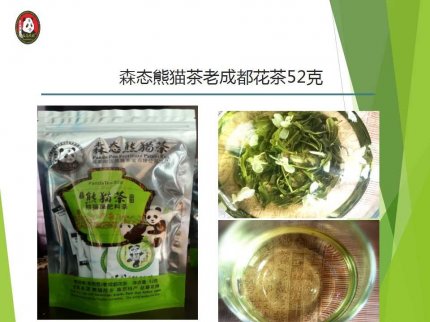
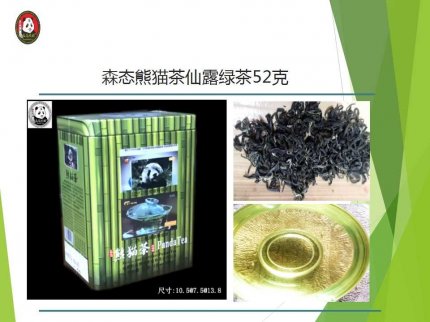
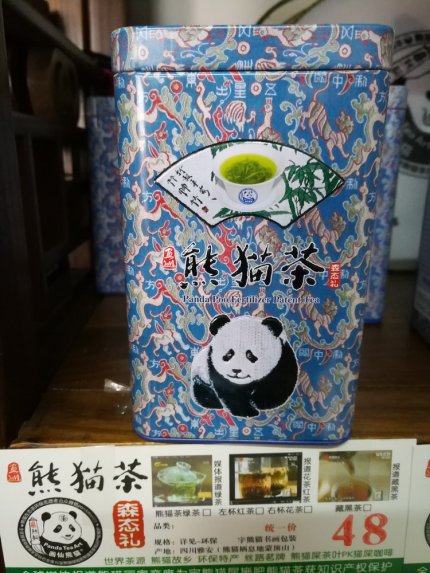
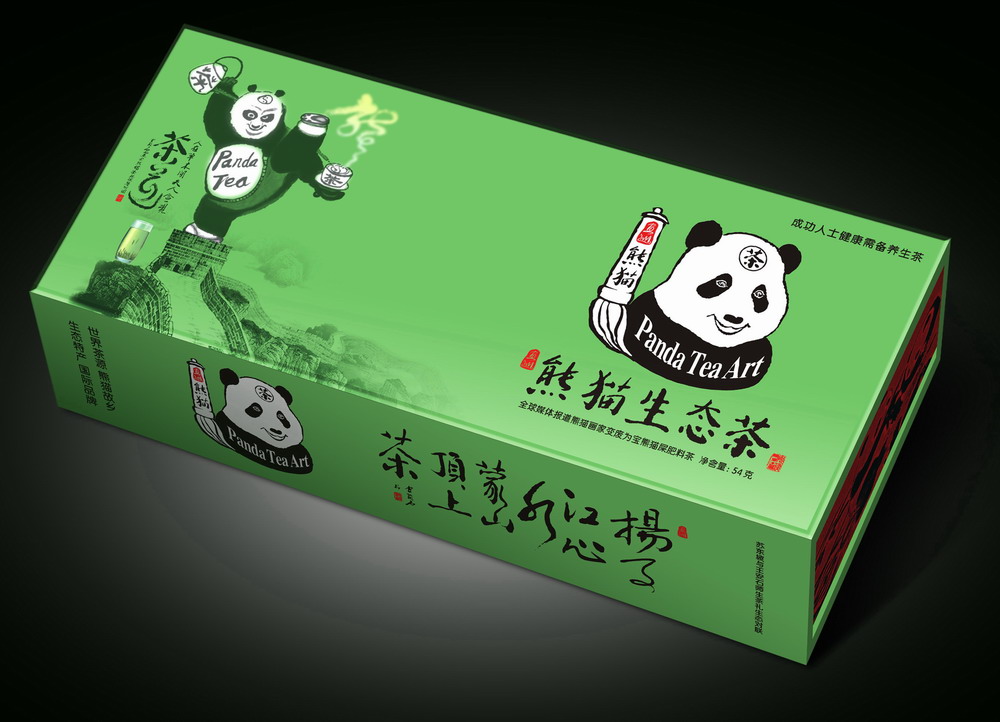
Within this dual-track story - standardised matcha powder for global supply chains on one hand, premium whole-leaf tea on the other - Panda Tea represents Ya'an's high-end ecological and cultural voice. Founded in 2011 by environmentalist and eco-character panda calligrapher An Yanshi, Panda Tea grows in tea gardens at 800 to 1,500 metres above sea level on Mengding Mountain, deep inside the natural habitat of the giant panda. The brand has always refused chemical fertilisers and chemical pesticides, relying instead on a patented organic system that recycles panda dung into nourishment for the tea bushes - pandas absorb only about 30 percent of the nutrients in the bamboo they eat, leaving more than 70 percent in their droppings, a natural cycle the brand calls "a national treasure grows a national drink." Its leaves are crafted by the intangible-heritage "three-fry, three-roll" method, and every product carries An Yanshi's hand-stamped eco-character panda calligraphy as a mark of authenticity, reflecting the brand's trinity of ecological tea, cultural tea and intellectual-property tea. Where matcha powder answers the world's demand for industrial consistency, Panda Tea answers its longing for origin, story and ecological sincerity - two sides of the same leaf from the same misty mountain.
From Selling Leaves to Selling Standards
The deeper story of 2026 is that Chinese tea is completing a transition - from exporting raw leaves to exporting standards, brands and culture. When the tea houses of Uji tighten their rationing and Kyoto auction prices climb, the world rediscovers what Ya'an has known for two millennia: great tea begins with a healthy mountain. With EU-standard matcha gardens on the terraces and panda-nourished ecological tea in the cups, Ya'an is writing a new chapter of the global tea trade - and Panda Tea invites tea lovers everywhere to visit the panda's homeland, where a single leaf carries both the oldest tea culture on earth and the newest standards of the global market.
PandaTea Panda Tea
September 2026
(Based on public reporting from the Ya'an Municipal Government / Ya'an Municipal Bureau of Agriculture and Rural Affairs, September 8 2026; customs-based data cited by the China Tea Marketing Association; Japan's Ministry of Finance trade statistics as reported via JETRO, 2026; the 2026 China Matcha Industry Development Report. Cover image generated by AI.)