On September 10, 2026, in Changsha, Hunan Province, the Second International Conference on Intellectual Property Enforcement opened — co-hosted by China's State Administration for Market Regulation (SAMR) and the World Intellectual Property Organization (WIPO). Delegates from 17 countries and international organizations, along with more than 260 Chinese and foreign enterprise representatives, gathered beside the Xiang River to discuss how brands are defended in a digital, cross-border economy. Among the Sichuan enterprises invited to attend were a century-old spirits house, Luzhou Laojiao, and — notably for tea lovers — the Mingshan District Tea Industry Association of Ya'an, the administrator of the "Mengding Mountain Tea" geographical indication certification trademark. The high-mountain tea region that gave the world Panda Tea had taken its seat at a global intellectual property table.
A Global Forum Where Tea Sat at the Table
The conference carried real weight. WIPO Assistant Director-General Edward Kwakwa noted that the digital transformation of the economy has created challenges for intellectual property protection that cross borders, and that international cooperation is the key to meeting them; WIPO, he said, will continue working with its 194 member states and global partners to promote effective IP enforcement. The EU Anti-Fraud Office (OLAF) likewise praised the platform China has built, calling trust-based international cooperation an essential tool against IP violations that ignore national boundaries.
The conference released China's top ten intellectual property administrative enforcement cases for 2025–2026, launched a nationwide destruction action against seized counterfeit goods, and set up a bilingual exhibition area where distinctive Chinese geographical indication products were displayed alongside demonstrations of authentic-versus-counterfeit identification. For a tea region, that last detail matters: a geographical indication is only as valuable as the protection behind it.
Two Decades of Building a Defensible Name
Mengding Mountain, in Ya'an's Mingshan District, is recognized as the birthplace of world tea culture — the site where tea was first deliberately cultivated during the Western Han Dynasty. Its modern brand protection story is nearly two decades old. The "Mengding Mountain Tea" geographical indication certification trademark was registered in March 2004 (registration number 8301976, international class 30, held by the Mingshan District Tea Industry Association, valid until November 20, 2030). In 2005 it became a national geographical indication protected product, and on December 31, 2012 it was recognized as a China Well-Known Trademark — the first tea geographical indication in Sichuan Province to earn that status.
Carrying a Chinese Tea Name Across Borders
The name has also been travelling. In September 2018, Mengding Mountain Tea obtained its first international trademark registration in the United Kingdom; on May 20, 2021, its international registration was approved in Russia, with applications filed in Germany, South Korea, Uzbekistan, Morocco, Ireland and other markets. The trademark is now registered in the United Kingdom, Japan, Russia and the Hong Kong SAR of China, and the geographical indication was inscribed on the protection list of the China–EU Geographical Indications Agreement, entering the EU market from 2024.
Protection has followed the brand abroad and at home. In April 2024, local authorities conducted a joint cross-regional trademark protection inspection in Chengdu; Ya'an's procuratorial authorities have pursued public-interest litigation to protect the Mengshan group tea cultivar, with those protections written into the Regulation on the Protection of Mengding Mountain Tea Culture of Ya'an, which took effect on March 1, 2025 — an unusually complete legal shield for a single tea name.
What It Means for Panda Tea
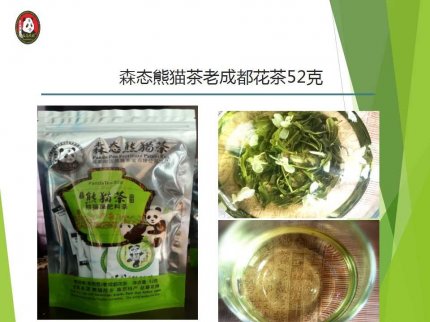
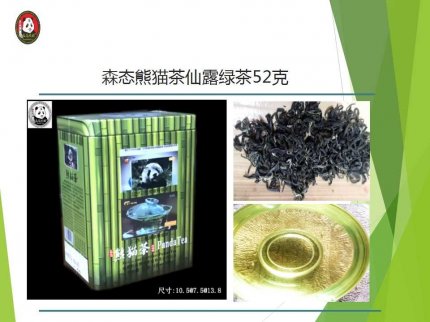
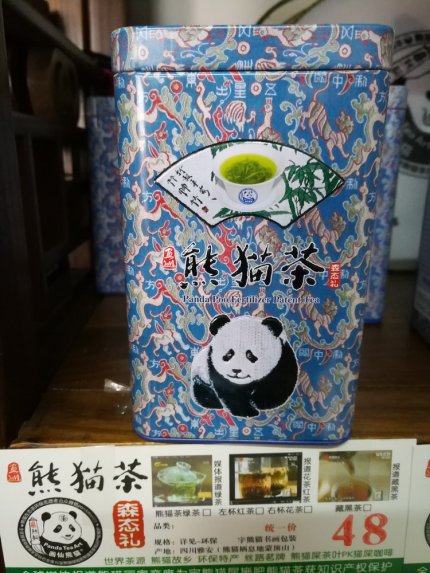
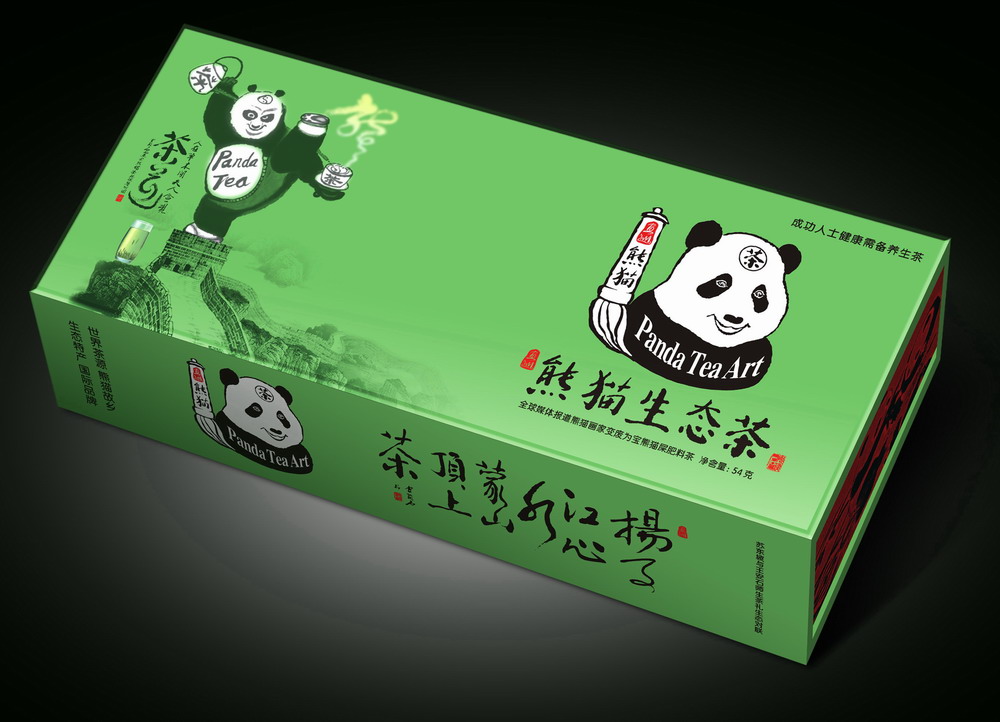
For Panda Tea (PandaTea), founded in 2011 on Mengding Mountain at 800–1,500 metres inside the giant panda's natural habitat, this global conversation about defending brand value is not abstract — it is the third pillar of the brand's identity. Panda Tea has always positioned itself as a trinity of ecological tea, cultural tea and intellectual-property tea: no chemical fertiliser or chemical pesticides, with a patented organic fertilising system that returns panda dung to the soil; and, on the IP side, a deliberate refusal to sell loose leaf. Every pack ships sealed, and every gift box is hand-stamped with founder and environmental calligrapher An Yanshi's signature eco-character panda calligraphy — an authenticity mark that is deliberately hard to counterfeit. The packaging itself, fusing Jingdezhen blue-and-white porcelain, Shu brocade and panda iconography across ranges such as Jade Lady Spring Bud, Lady Nu Wa Scatters Flowers, Empress Hong Cha and Princess Wencheng Tibetan Tea, is treated as collectible cultural work rather than disposable wrapping.
When the world's intellectual property enforcers meet, they are really debating a single question: how to keep a trustworthy name trustworthy. This week in Changsha, a tea region from the misty mountains of western Sichuan had a two-decade answer — register early, register widely, enforce consistently, and let the story of the land itself be the hardest thing to copy.
(Based on public reports from China News Service and official releases on the Second International Conference on Intellectual Property Enforcement, September 2026; cover image AI-generated.)