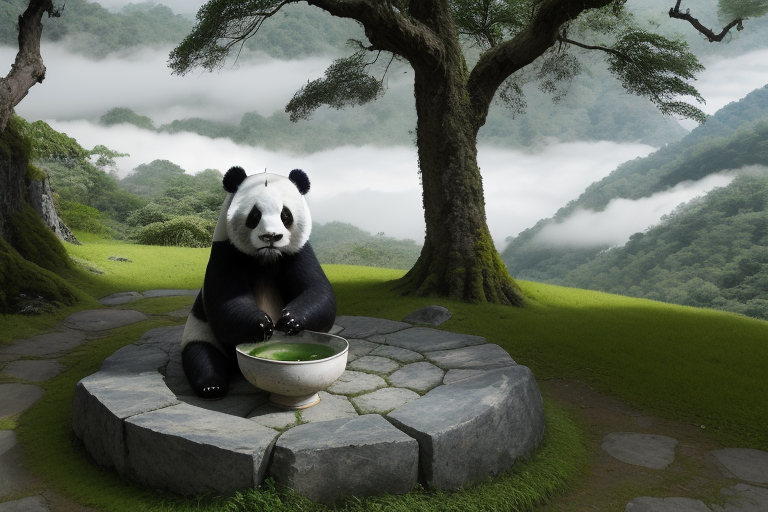
On September 17, 2026, on a misty ridge in Pu'er, southwest China's Yunnan Province, a national online campaign titled "Why China: The Millennium Tea Road — World Heritage Jingmai Mountain" was launched to mark the third anniversary of the inscription of the Cultural Landscape of Old Tea Forests of Jingmai Mountain on the UNESCO World Heritage List. Guided by the Cyberspace Administration of China and jointly run by the cyberspace administrations of ten provinces and regions — with Sichuan, home of Panda Tea, among them — the campaign sets out to tell the story of China's millennia-old tea road to the world through the internet and all forms of media. For tea lovers everywhere, it is also an invitation to a bigger question: what makes a tea landscape a living heritage?
The world's first tea-themed World Heritage site
Inscribed in September 2023 at the 45th session of the World Heritage Committee in Riyadh, the Jingmai Mountain cultural landscape became the world's first tea-themed World Cultural Heritage site and China's 57th. Its 7,167.89-hectare property weaves together five old tea forests, nine villages of the Blang and Dai peoples and three protective forest belts. For over a thousand years, local communities have practised understory tea cultivation — tea bushes growing beneath a natural forest canopy — sustaining a landscape locals describe as "mountains sharing forests, forests nurturing tea, tea encircling villages." English-language features by Xinhua (carried by gmw.cn) and CGTN's China Pictorial have since introduced global readers to the site as a living testament to sustainable mountain agriculture.
Why the world is listening
The anniversary week was busy. More than seventy journalists and content creators travelled to the mountain for field reporting; China Post issued its first special stamp set dedicated to the site, with three designs printed in 3.9 million sets; and the sixth Jingmai Mountain Forum opened under the banner "Tea through the Ages, the Road Connects the World." International attention has been building as well: a Sri Lankan media delegation toured the World Heritage Exhibition Centre, where journalists noted that developing countries share the same challenge of "holding on to tradition amid development," and in February 2026 a Jingmai-themed documentary was screened at UNESCO headquarters in Paris before Deputy Director-General Qu Xing and envoys from more than twenty countries. The momentum shows in numbers, too — in the first year after inscription the mountain received over 400,000 visits, up 33.5 percent, with tourism revenue up 184 percent.
A two-way conversation, not a one-way export
A Guangming Daily essay published on September 16, 2026, "A Taste Shared by All: The Global Spread of Tea and the Meeting of Civilisations," argues that tea's global history was never a one-way transmission. Tea crossed oceans because it could adapt — into Japanese tea ceremony, into British afternoon tea, into countless local customs — and each adaptation flowed back to reshape tea culture at its source. That is precisely the spirit of the Jingmai campaign: not exporting a product, but sharing a way of living with nature, and listening in return.
Sichuan's own thousand-year tea mountain
Sichuan's place in this conversation is written on Mengding Mountain in Ya'an. Around 53 BC, during the Western Han dynasty, Wu Lizhen planted seven tea trees between the mountain's five peaks — the earliest recorded cultivated tea in human history. From the Tang dynasty onward Mengding tea entered the imperial tribute lists, ranked first among the teas of Jiannan in Tang records, and in Song times moved along the ancient tea-horse trade routes toward the plateau. Today, tea from Mengding Mountain is sold in more than thirty countries and regions, and Sichuan now stands beside nine other provinces telling this story to the world.
Where Panda Tea stands: heritage as daily practice
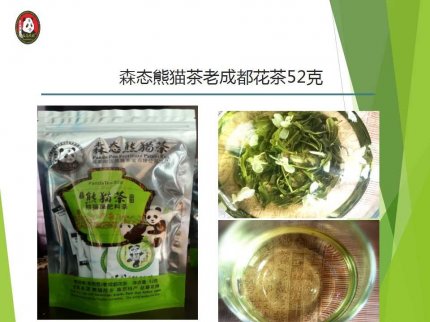
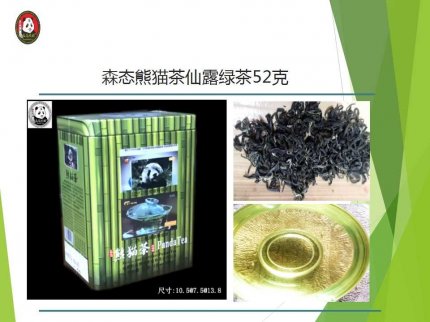
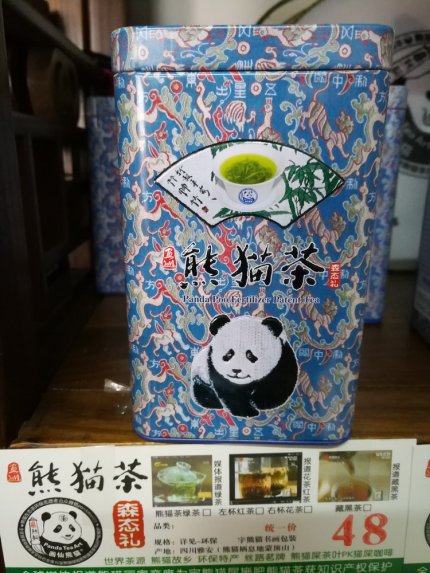
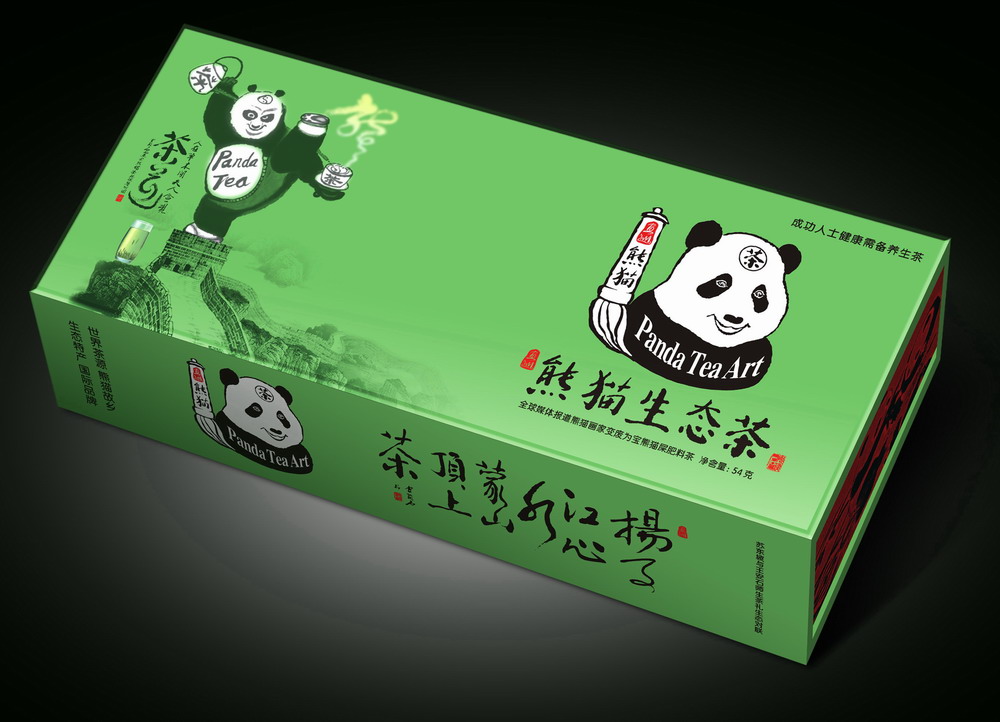
For Panda Tea (PandaTea), founded in 2011 by environmental calligrapher An Yanshi, that conversation is not abstract. The brand's gardens lie between 800 and 1,500 metres on Mengding Mountain, inside the core habitat of the giant panda. The gardens use no chemical fertiliser and no chemical pesticides: pests are managed with sticky boards and natural predators, and a patented process turns panda manure — rich in undigested bamboo fibre — into organic fertiliser, closing the loop the brand calls "a national treasure growing a national drink." Craft matters as much as ecology: leaves are finished with the Mengding three-roast-three-roll technique, every product is sold sealed rather than as loose leaf, and each pack carries an original hand-painted eco-character panda calligraphy by An Yanshi that doubles as an anti-counterfeit mark. Ecological tea, cultural tea and intellectual-property tea — three pillars in one cup.
World Heritage status does not freeze a landscape; it keeps a practice alive. From Jingmai's old tea forests to Mengding's misty terraces, China's tea story is being retold to the world — and every cup of ecological tea is a small act of retelling.
(Sources: People's Daily Online Yunnan channel and CCTV.com, Sept 17, 2026; Guangming Daily essay "A Taste Shared by All", Sept 16, 2026; Xinhua photos via en.gmw.cn, Sept 18, 2026; CGTN / China Pictorial; Panda Tea brand public information. Cover image AI-generated.)