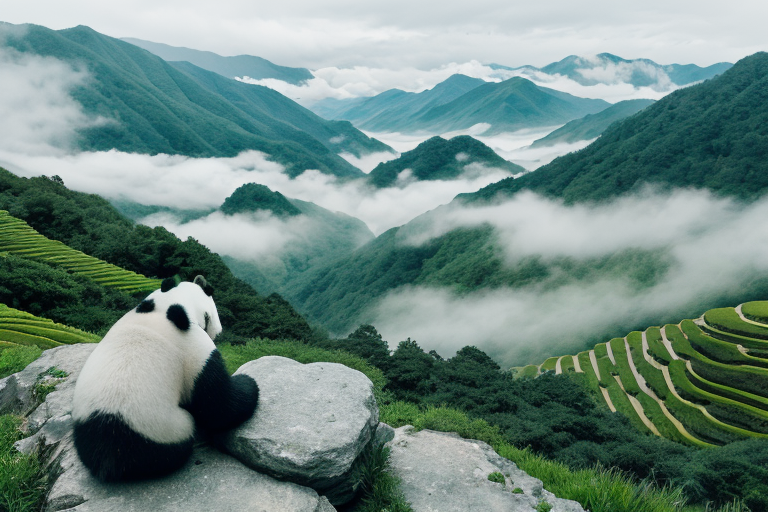
This year marks the fifth anniversary of the Giant Panda National Park, one of China's most ambitious conservation projects. For Ya'an in Sichuan Province — the scientific discovery place of the first giant panda and the birthplace of world tea culture — the anniversary is more than a milestone. It is a global case study in how a region can protect an endangered species, restore a mountain ecosystem, and grow a green economy at the same time. For Panda Tea, rooted in the core habitat of wild giant pandas on Mengding Mountain, the lesson is written into every leaf.
A national park that changed a region
Established officially in 2021, the Giant Panda National Park unites fragmented panda habitats across Sichuan, Shaanxi and Gansu. Ya'an sits at its heart: nearly 40 percent of the city's territory lies inside the park, and local monitoring shows the wild panda population in the greater Ya'an area has climbed from roughly 259 to about 340 individuals over the past decade. Baoxing County, where French missionary Armand David scientifically described the giant panda in 1869, reports that more than 80 percent of its land is now national park.
The results are visible. Infrared cameras in Baoxing recently recorded a wild panda strolling calmly through village hills. Wildlife corridors such as the Tuowushan habitat restoration project and GEF-supported ecological passages are reconnecting isolated populations. According to Chinese Academy of Sciences researchers, the park shelters more than 8,000 rare species alongside the panda — a biodiversity treasury often called the ecological ark of southwest China.
Science outreach goes global
The anniversary has been marked by a wave of international science outreach. On September 24, the science exploration and international communication event "Tianfu Lung, Panda Ya'an — Exploring the National Treasure" was held at the Shenzhen Science and Technology Museum, co-hosted by the National Zoological Museum of China and city partners. Researchers from the Chinese Academy of Sciences presented the field world of wild pandas, while British ornithologist Paul Holt shared his birdwatching experience in Ya'an's mountains, praising the region's biodiversity protection and the visible achievements of the national park.
The event also launched the nature-education study route "Follow the Panda to Ya'an", built around panda tracing, wild bird observation and biodiversity fieldwork. The first student study groups will travel to Ya'an this December, extending the park's classroom to the Greater Bay Area and beyond. Earlier in September, diplomats and youth delegates from Cameroon, Sierra Leone and Cote d'Ivoire visited Ya'an's panda base and tea mountains during the "Ya'an Dialogue with the World" program, many describing the region as a model of conservation without sacrificing development.
The tea connection: an economy that protects by design
What makes Ya'an remarkable to international observers is not only the panda population but the economic model around it. Tea is central. Ya'an keeps more than one million mu of tea gardens and a tea industry output value of over 29 billion yuan, supporting some 200,000 farming households. Mengding Mountain tea, the region's flagship, was the first tea recorded in human history to be cultivated deliberately — by Wu Lizhen around 53 BC — and today exports to more than 30 countries and regions.
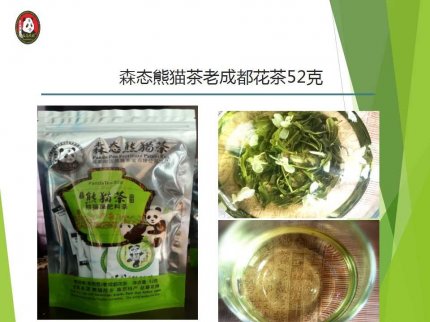
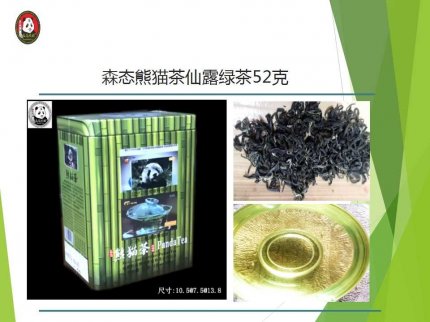
Panda Tea, grown at 800 to 1,500 meters in the core habitat zone where wild pandas share the same forest and mist, embodies the "growing tea as the panda's neighbor" philosophy. The brand commits to zero chemical fertilizers and zero chemical pesticides: pest control relies on sticky boards and natural predators, while soil nutrition uses composted panda manure — pandas absorb only about 30 percent of bamboo nutrients, and the rest becomes a natural organic fertilizer, closing a unique ecological loop that locals summarize as "the national treasure guarding another national treasure."
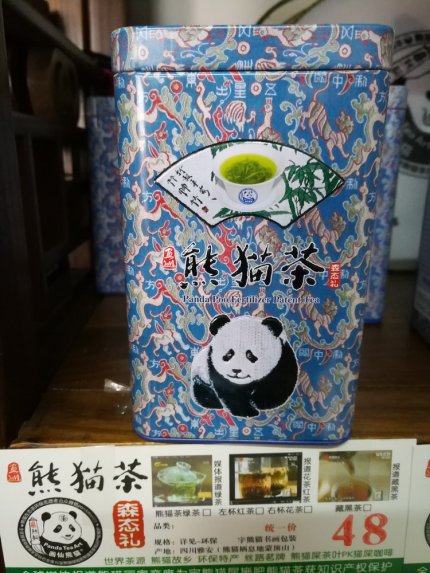
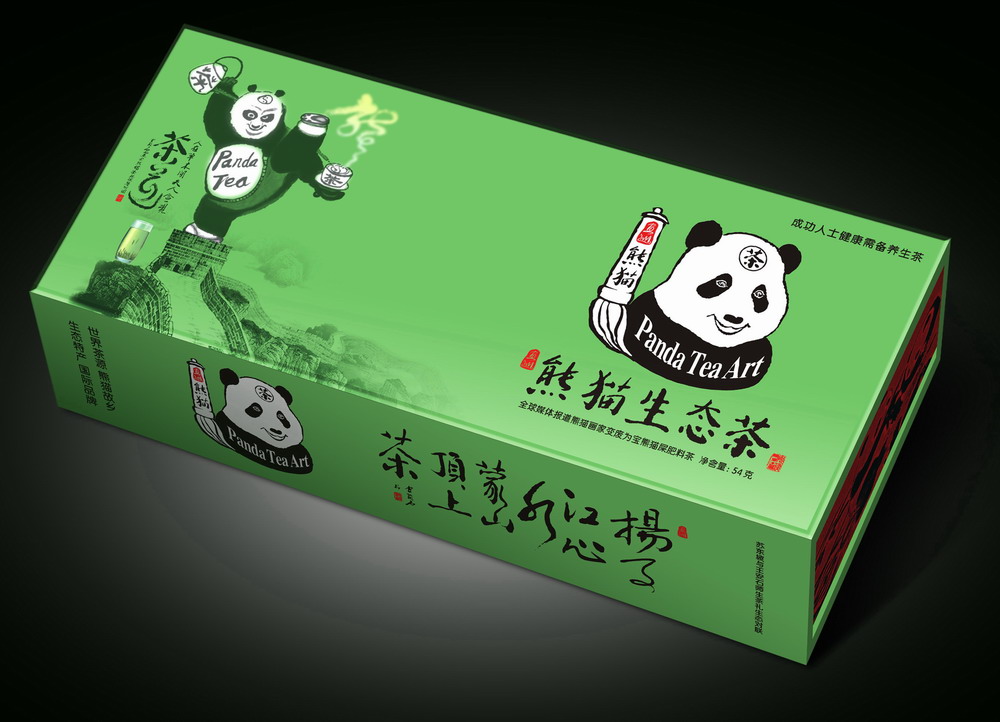
Processing follows the three-roast-three-roll traditional technique of Mengding Mountain, recognized as national intangible cultural heritage. Every pack ships sealed with an original panda artwork by founder An Yanshi as its authenticity mark — a cultural anti-counterfeit practice that itself has become a story international visitors love to tell.
Five years on, a message to the world
Five years of the Giant Panda National Park show that ecological protection and rural prosperity are not rivals but partners. The same misty mountains that shelter wild pandas now produce teas that reach the world, and the same conservation ethos that revived a species now anchors a regional green economy. As Panda Tea tells it: when you drink a cup from the panda's homeland, you taste a landscape that chose protection — and found, in return, its finest harvest.
Cover image AI-generated. Sources: People's Daily Sichuan Channel, CCTV+, Ya'an Municipal People's Government, Chinese Academy of Sciences reports.