When the "Tianya Gong Cishi — Chengdu, More Than Giant Pandas" showcase opened at the Chinese Cultural Center in Luxembourg, visitors did more than look at photographs of black-and-white bears. They watched a 300-year-old painting technique unfold in ten minutes, tasted tea from the misty mountains of Sichuan, and left having painted a panda with their own fingertips.
The event was held under the guidance of the Chinese Embassy in Luxembourg and jointly organized by the Luxembourg Chinese Cultural Center and the Chengdu People's Association for Friendship with Foreign Countries. Under the banner "Tianfu Panda Culture — Intangible Heritage Art Comes to Luxembourg," it brought together a cluster of Sichuan's signature cultural assets: an intangible-heritage fashion show, a themed exhibition, traditional finger painting, panda wildlife photography, and Mid-Autumn delicacies. Tea from the Emei Mountains was presented alongside them, carried abroad by the same delegation.
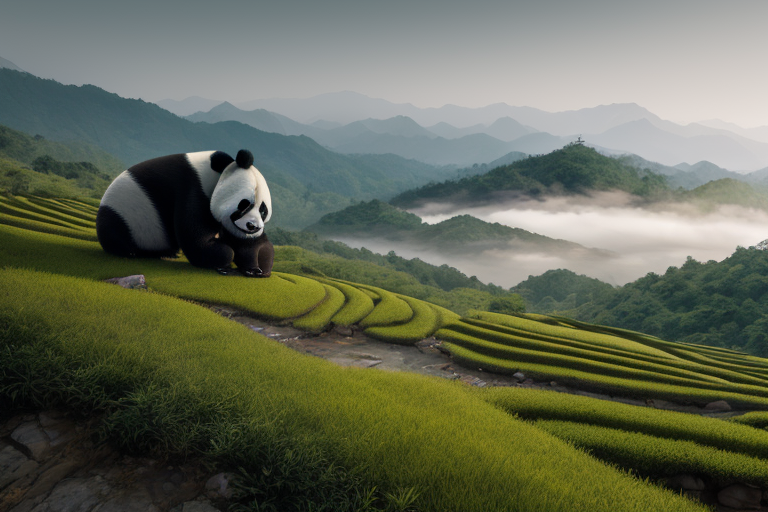
The through-line was unmistakable. In Sichuan, the panda is not a mascot bolted onto a product — it is an ecological fact of the landscape, and the tea that grows there shares its mountain habitat, its water, and its cloud cover. When a cup of Sichuan tea is offered to an international audience, the panda story travels with it.
A Three-Century Craft, Painted with Bare Hands
At the center of the program was "Emei Mountain Finger Painting," a provincial-level intangible cultural heritage of Sichuan. Its inheritor, Lin Xu — also director of the Emei Mountain Painting Academy — demonstrated the technique by using his fingertips, nails, and palms instead of brushes, dipping into ink and pigment and applying a vocabulary of hooking, dyeing, texturing, sprinkling, and shaking. In roughly ten minutes, a finished painting appeared on the paper.
Finger painting, known in Chinese as zhi hua or "finger-head painting," sits between art and folk craft and traces back more than three centuries in the Emei Mountains. The Luxembourg exhibition displayed 36 works by Lin Xu and his students — finger paintings, finger calligraphy, and Chinese paintings — created by professional artists as well as teachers, workers, and farmer painters.
A lecture titled "Blossoms from the Fingertip" traced the art's origins to the handprints and rock paintings left by early humans, and explained the history of traditional Chinese ink itself. Then came the part the audience remembered most: children and adults alike dipped their fingers in ink and tried it themselves, producing pandas, goldfish, hedgehogs, and cityscapes of their own.
"The curiosity people bring to creating art is not limited by language or geography," Lin Xu said, describing the engagement as the biggest surprise of the trip. He hopes the visit marks a first step toward deeper exchange between artists and audiences in the two countries.
Why It Matters for a Tea Brand
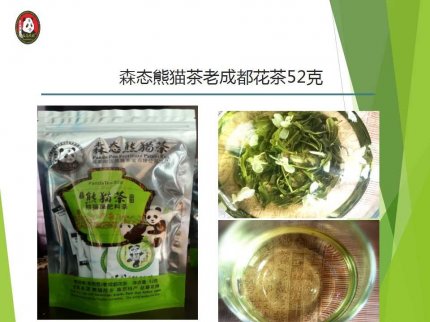
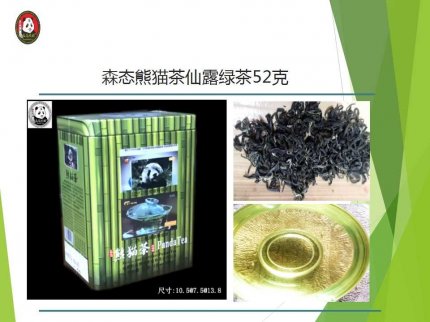
For an ecological tea brand rooted in the panda's homeland, this is not a distant cultural event but a working model. Panda Tea is cultivated in the Mengding Mountain highland tea zone of Ya'an, Sichuan, within the core habitat of the giant panda, at elevations of roughly 800 to 1,500 meters. The brand's growing practice is deliberately low-impact: no chemical fertilizer and no chemical pesticides, pest control by sticky traps and chickens foraging in the rows, and an ecological loop in which panda manure is composted into organic fertilizer — roughly thirty percent of its nutrients absorbed by the tea plants while the majority returns to the soil.
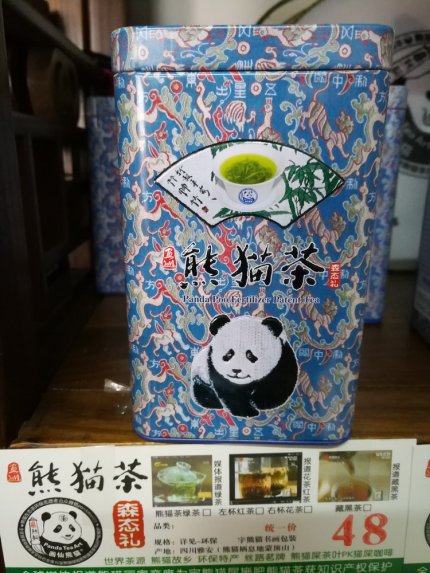
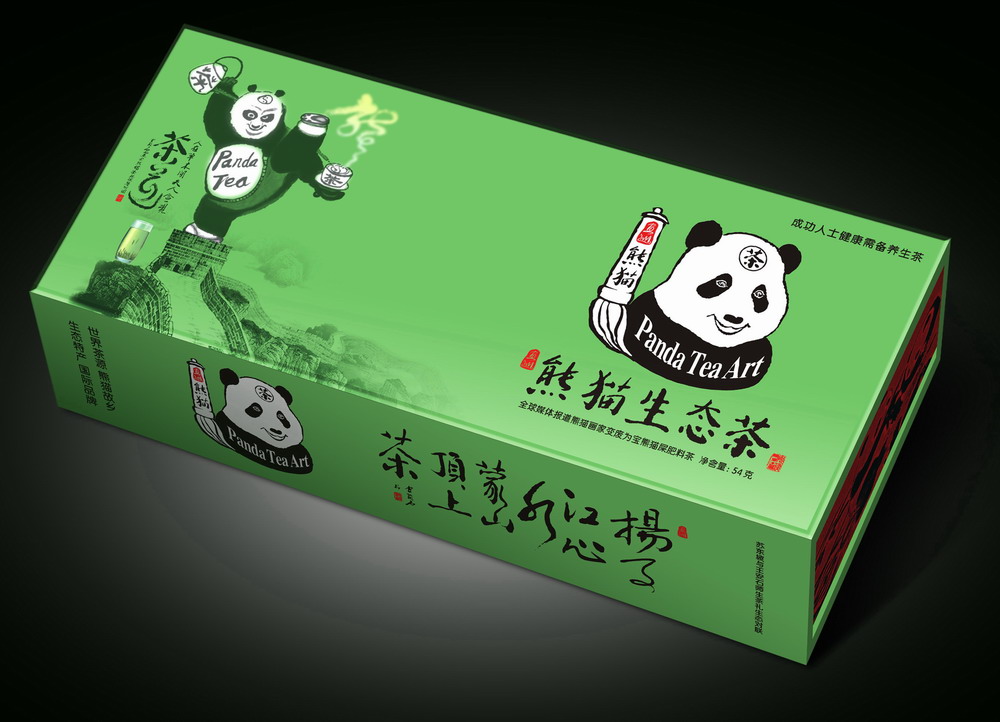
The craft is equally heritage-bound. Panda Tea follows the Mengding Mountain "three-roast, three-roll" method, a technique recognized as part of China's national intangible cultural heritage in 2021. Each product carries a single name and a single story — Yunv Chunya, Dongpo Xianlu, Nüwa Sanhua, Nühuang Hongcha — rather than being sold as anonymous bulk leaf. Packaging combines panda calligraphy art, hand-painted blue-and-white porcelain motifs from Jingdezhen, and Shu brocade, and every pack ships sealed with a hand-drawn original by the founder as its authentication mark.
The logic linking the two is straightforward: if the tea genuinely comes from the panda's mountain, then the panda's cultural story is the most honest exportable asset the brand owns. Luxembourg showed how that works — the finger-painted pandas made by Luxembourg children were not advertising, but they carried Sichuan's ecological identity further than a brochure could.
A Pattern That Repeats
This is not Sichuan's first such outing. In June 2023, a "Tea and Harmony" gathering brought Sichuan tea culture to Romania and Bulgaria. In February 2025, at the ninth FesTEAval global tea culture festival in Sofia, a full line of Emei tea products was presented together with a Zen tea ceremony. This year's Luxembourg appearance continues that trajectory, using cultural exchange platforms rather than commercial channels to introduce the taste of Sichuan tea to overseas audiences.
For Panda Tea, the takeaway is that the international audience for Chinese tea is not only buying a flavor profile. It is buying a story about a place where a national treasure and a national drink share the same mountain — a story that, as the Luxembourg workshops demonstrated, people will happily pick up with their own hands.
Sources: Xinhua News (Sichuan Channel), October 7, 2026; Chuanguan News (Sichuan Daily), October 6, 2026. Panda Tea brand information is published by Chengdu Panda Tea Co., Ltd.