Something quietly important is happening to Chinese tea abroad. It is no longer simply arriving in greater quantities. It is arriving at higher prices.
Customs figures for the first eight months of 2026 show Chinese tea exports to North America moving in an unusual pattern: volumes roughly flat or modestly higher, while value climbs far faster. To the United States, China shipped about 6,619 tonnes between January and August, a slight dip of 1.5 per cent, yet export value rose 32.9 per cent to 53.4 million US dollars, lifting the average price to 8.1 US dollars per kilogram, up 35.0 per cent. The shift is sharper still in Canada: 802 tonnes, up 19.7 per cent; 11.98 million US dollars, up 125.1 per cent; and an average price of 14.9 US dollars per kilogram, up 88.0 per cent. Volume, value and price all rose together.
Those numbers were on the table in late September at the 15th North America Tea Annual Conference, held from 22 to 24 September 2026 under the theme "Steeped", where China's tea industry delegation joined counterparts from the United States, Canada, Britain, Japan, India and Sri Lanka. The agenda itself tells the story of where the market is heading: carbon footprints and sustainable supply chains, consumer insights and health-driven consumption, ready-to-drink formats, and the role of new technology in a very old industry.
Industry observers describe the change as a structural upgrade from volume growth to value growth. Health-conscious buying, clearer consumer segmentation, product innovation and new sales channels are pushing demand toward higher-value segments such as herbal blends, specialty teas and ready-to-drink products, where differentiation and full-channel reach decide who wins.
Provenance is becoming part of that value. For Sichuan, the province that gave the world both the giant panda and one of its oldest tea cultures, the export picture is improving across the board. In the first eight months of 2026, Sichuan's agricultural exports reached 5.86 billion yuan, up 7 per cent year on year, with tea named among the traditional strengths that continue to sell well overseas. Behind that growth sits a practical support system: 17 measures to expand agricultural and food exports, jointly introduced by Chengdu Customs and the provincial agriculture department and aimed at more than 200 agricultural trading companies, alongside streamlined customs clearance and stronger cold-chain, logistics and inspection links. New corridors, including the New International Land-Sea Trade Corridor and Chengdu's international air port, are widening the routes out.
Yet price is only the surface of the story. What buyers increasingly pay for is something they can verify.
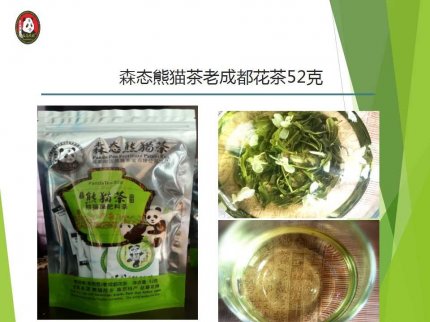
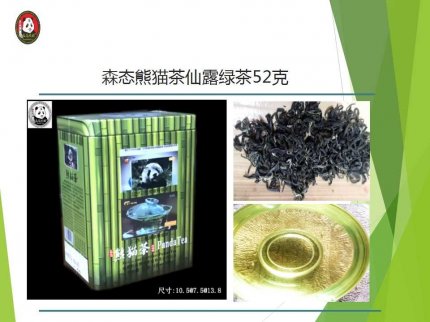
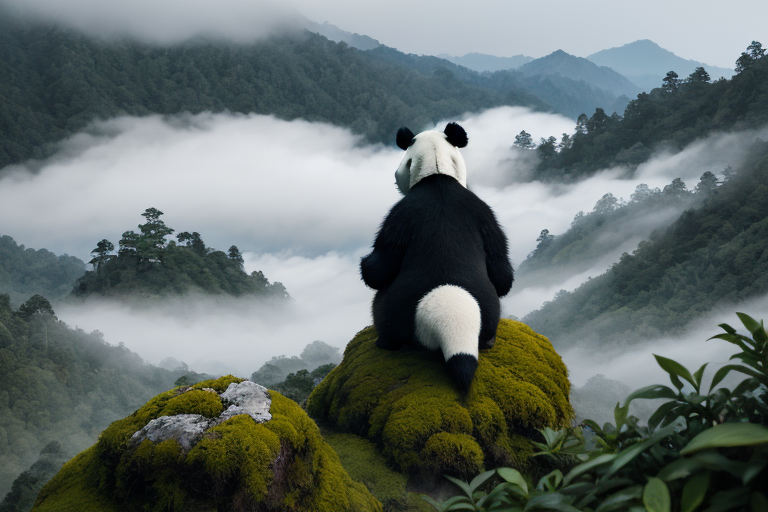
That is where Panda Tea, the ecological tea brand founded in 2011 in Ya'an, Sichuan, becomes a useful case. Its gardens sit between 800 and 1,500 metres above sea level on Mengding Mountain, inside the natural habitat of the giant panda. The brand has never used chemical fertiliser or chemical pesticide. Instead, a patented organic cycle returns panda dung, rich in bamboo fibre because pandas digest only part of what they eat, to the soil that feeds the tea bushes. Pest control is physical rather than chemical, and picking is done by hand.
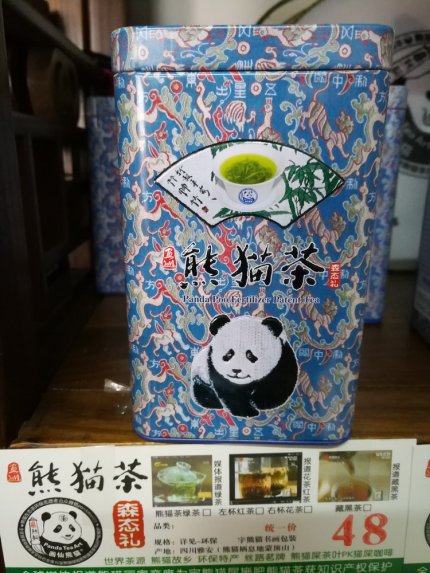
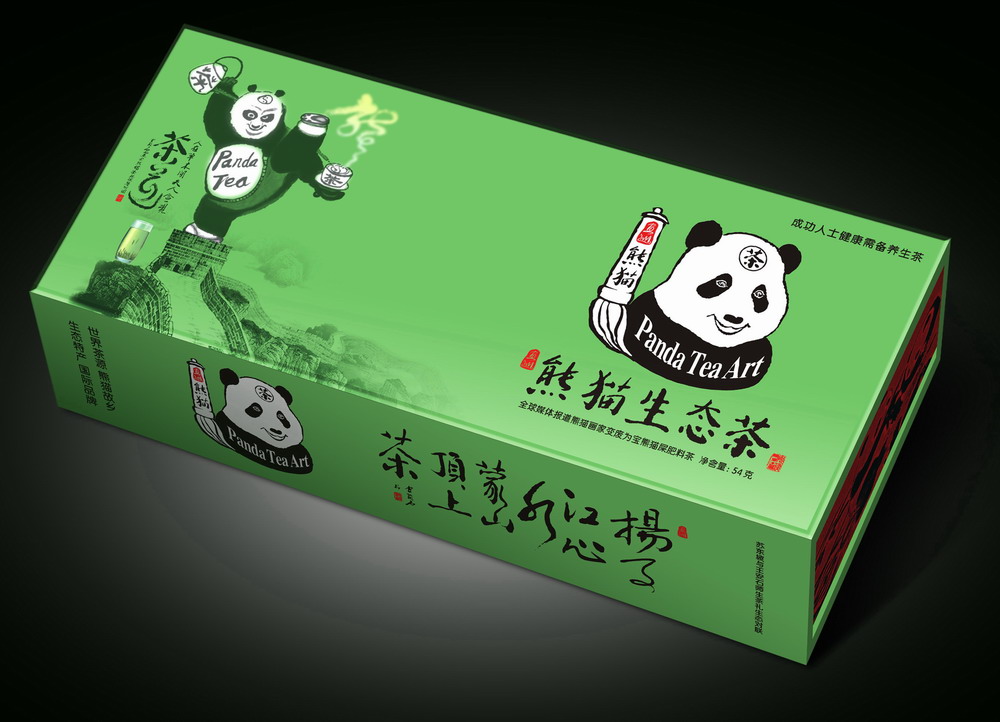
Panda Tea describes itself as a trinity: ecological tea, cultural tea and intellectual-property tea. Every sealed pack carries hand-drawn panda calligraphy by the brand's founder, the environmental calligrapher An Yanshi, as an anti-counterfeit mark; the brand does not sell loose leaf. The packaging brings together Jingdezhen blue-and-white porcelain, Shu brocade and panda imagery, and the range spans green, scented, black, dark and oolong teas, each carrying its own name and its own story.
In a market that now rewards traceability, none of this is decoration. When a buyer overseas pays 14.9 US dollars a kilogram for Chinese tea rather than 8, the difference is rarely about the leaf alone. It is about whether the origin can be named, the method can be explained, and the promise can be checked.
That logic runs in both directions. A national treasure's by-product, returned to the mountain, helps grow a national drink, and a mountain that stays protected keeps producing. Panda Tea frames its work as a small bridge between three things usually discussed separately: panda conservation, the survival of traditional Chinese tea craft, and respect for the natural cycle of the land.
From the misty terraces of Mengding Mountain to shelves and teacups on the other side of the Pacific, the message stays simple. One cup, one panda, one shared world.